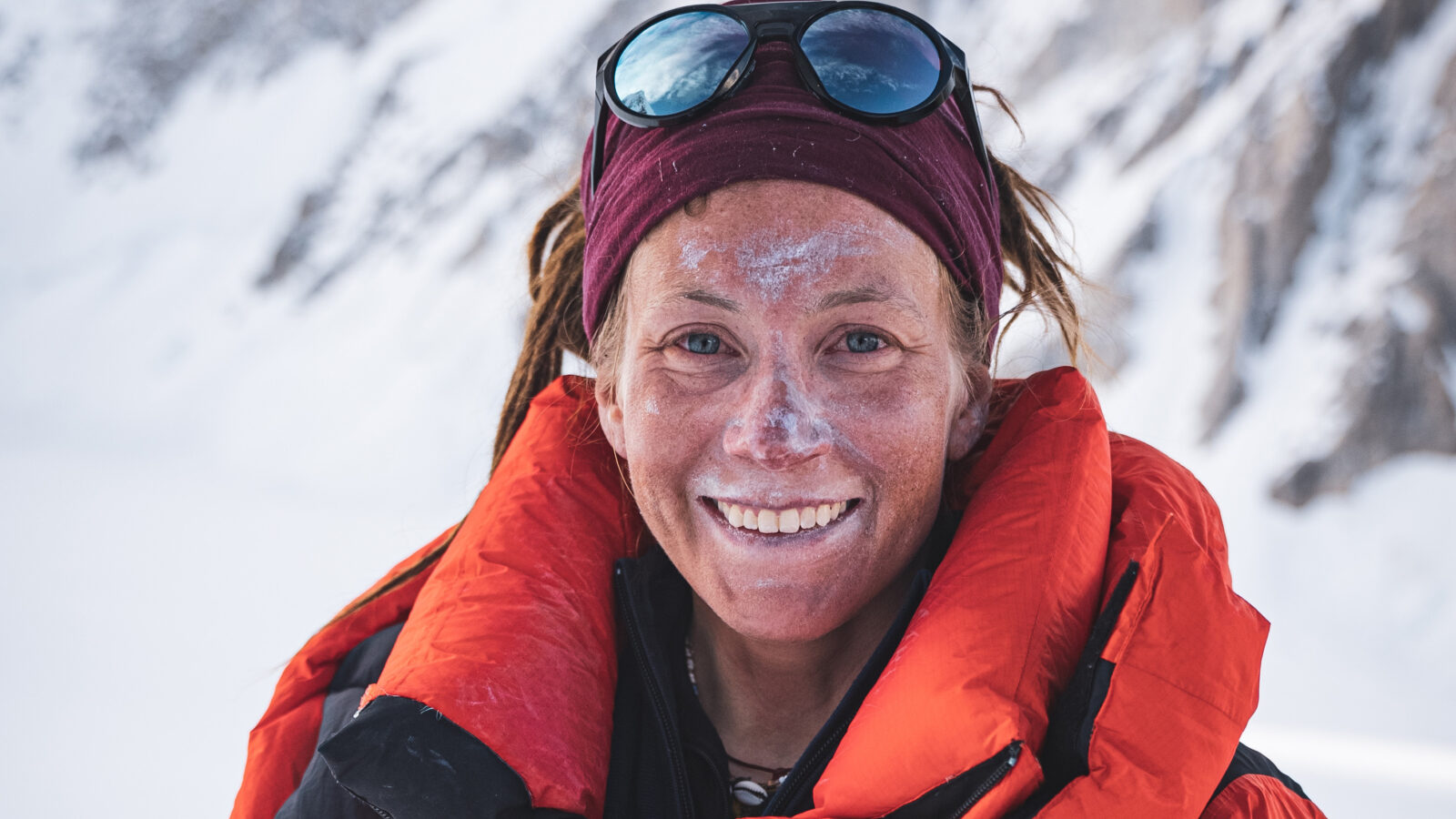
Kristin Harila
Kristin Harila is a Norwegian mountaineer, raised on a farm near Vadsø in Finnmark, and even as a child she learned the value of hard work. At the age of 11 she drove a tractor, and at 13 she juggled three jobs alongside school and sports competitions. With great discipline and determination, she bought her first flat at 16, when she moved away from home to attend a skiing-focused upper secondary school.
Her background in cross-country skiing and cross-country running gave her the endurance that would later prove decisive on the world's highest mountains.
Before committing fully to climbing, Harila built a solid career in business. She had management responsibility for 50 shops and several hundred employees in one of Norway's largest furniture chains. A company trip to Kilimanjaro in 2015 changed everything. There she had her first encounter with high-altitude climbing, and began spending every holiday on Norway's highest mountains before finally quitting her job to devote herself fully to mountaineering.
In 2021 she climbed Mount Everest for the first time. Finding the ascent less demanding than expected, she continued straight on to the neighbouring peak of Lhotse and set a world record as the fastest woman to summit both peaks in under 12 hours. The following year she broke her own record, completing Everest and Lhotse in under nine hours.
In 2022, Harila announced that she would break the world-famous Nims Purja's record for climbing all 14 of the world's mountains above 8,000 metres – a feat many believed impossible to repeat. Without sponsors, she sold her flat and travelled to Nepal. Her first attempt stopped after 12 peaks in under five months, when China denied access to Tibet. She did not give up, and returned the following season.
The next year she teamed up with Tenjen Lama Sherpa. On 27 July 2023 they reached the summit of K2 as their fourteenth mountain above 8,000 metres, setting a world record by climbing all 14 peaks in just 92 days. In total, Harila has climbed 29 mountains above 8,000 metres.
